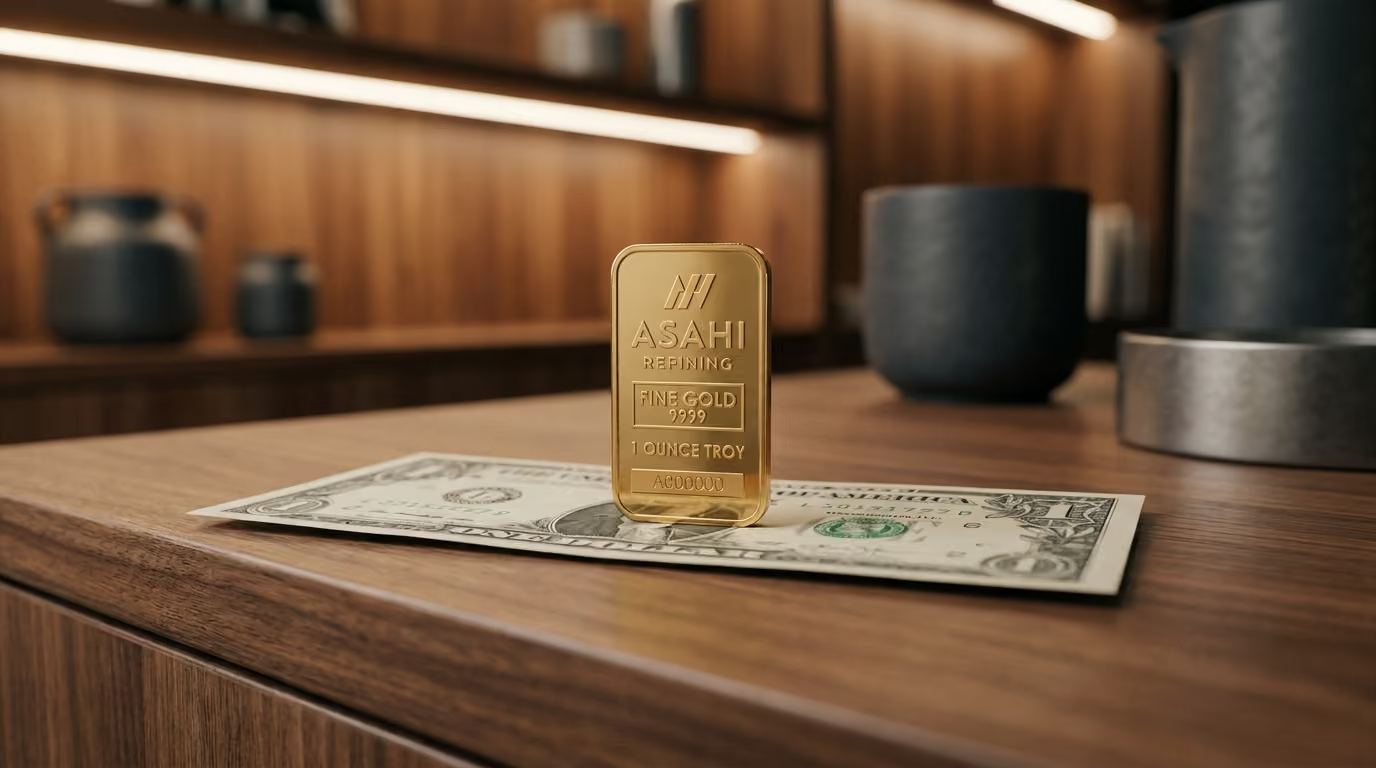

The short answer is no. The U.S. dollar has not been redeemable for gold since 1971, and individual citizens have not been able to redeem dollars directly for gold since 1933. What backs the dollar today is the full faith and credit of the United States government, the policy of the Federal Reserve, and the willingness of the global market to accept dollars in exchange for goods and services.
That is a simple answer to a question a lot of people are asking right now. The more useful conversation is what happened to the gold standard, what replaced it, and what that means for households trying to preserve purchasing power across decades.
A Brief History of the Gold Standard
For most of American history, the dollar was redeemable for a fixed amount of gold. Two events ended that arrangement in stages.
- 1933. During the Great Depression, the U.S. government called in privately held gold coins, gold bullion, and gold certificates. Domestic redemption of dollars for gold ended. The official price of gold was reset shortly after, from $20.67 to $35 per ounce.
- 1944. Under the Bretton Woods agreement, the U.S. dollar became the global reserve currency. Other currencies were pegged to the dollar, and the dollar remained convertible to gold at $35 per ounce, though only for foreign governments and central banks, not for individuals.
- 1971. Faced with mounting pressure on U.S. gold reserves, the Nixon administration suspended international convertibility of the dollar to gold. The action was framed as temporary. It was never reinstated.
Since 1971, the U.S. dollar has operated as a fiat currency. "Fiat" is a term that simply means the currency derives its value from government decree and broad market acceptance, not from a fixed claim on a physical asset.
What Backs the Dollar Today
Calling the dollar "unbacked" is technically inaccurate. It is backed, just not by gold. Today's dollar is supported by:
- The taxing power of the United States government. Dollars are accepted for the payment of taxes, which creates structural demand for the currency.
- Federal Reserve monetary policy. The Fed manages the supply of dollars and the interest rate environment.
- Treasury debt. U.S. Treasury bonds, bills, and notes are widely held by foreign governments, institutions, and individuals as a store of value.
- Global reserve status. A meaningful share of international trade and central bank reserves is still denominated in dollars.
This system has worked, by most measures, for more than fifty years. It has also produced steady, compounding erosion in the dollar's domestic purchasing power. A dollar today buys a fraction of what it did in 1971. That is not a partisan observation. It is a direct read of the Bureau of Labor Statistics inflation data.
Why People Are Asking the Question Now
Search interest in "is the U.S. dollar backed by gold" has been climbing for years. The reasons are practical, not ideological.
- Persistent inflation has reminded households that dollars saved today buy less tomorrow.
- Federal debt and deficit levels are at multi-decade highs as a share of GDP.
- Central banks around the world have been net buyers of physical gold for several consecutive years, accumulating at a pace not seen in decades.
- A growing share of international trade settlement is occurring outside the dollar system.
None of those data points predict any particular outcome. They do help explain why the question is being asked. When the long-term store-of-value role of any currency is in motion, savers tend to look at what has held purchasing power across generations.
Why Gold Has Held Up
Gold's role as a store of value is not based on government decree. It rests on a few durable properties.
- Finite supply. Above-ground gold can only grow at the rate the world can mine and refine it, which historically is one to two percent per year.
- Universal recognition. Gold is accepted as a store of value across every major culture and economy, and has been for thousands of years.
- No counterparty. Physical gold does not depend on a company remaining solvent, a government remaining stable, or a financial institution remaining open.
History is clear on this much: every fiat currency in modern history has eventually lost a meaningful share of its purchasing power. Gold has not. That is not a forecast. It is a historical pattern that informs how a number of households think about long-term savings.
What This Means for a Household
If the dollar is no longer redeemable for gold, that does not mean the dollar is in crisis. It means dollars are a unit of exchange and a short-to-medium-term store of value, while physical gold and silver play a different role: a long-term anchor for purchasing power that does not depend on any single institution.
Many of our clients hold both. Dollars for daily life, savings, and short-term reserves. Physical metals for the portion of long-term wealth they want to preserve outside the financial system. Neither replaces the other. They serve different jobs.
The Bottom Line
The U.S. dollar is not backed by gold and has not been since 1971. It is backed by government policy, central bank management, and global market acceptance. That system has functioned for more than five decades, and at the same time, the dollar's purchasing power has eroded steadily over that period.
Owning physical precious metals is one of the ways households respond to that long-running pattern. It is not a reaction to any single headline. It is a structural choice about what portion of long-term savings sits inside the dollar system and what portion sits outside it.
Frequently Asked Questions
When did the U.S. leave the gold standard?
In stages. Domestic redemption of dollars for gold ended in 1933. International convertibility for foreign governments and central banks ended in 1971. The U.S. dollar has operated as a fiat currency, backed by government policy and market acceptance, since 1971.
Does the U.S. government still own gold?
Yes. The Treasury holds gold reserves, the largest portion of which is reported as held at the United States Bullion Depository at Fort Knox. The U.S. Mint publishes monthly status reports of these holdings. The gold is held as a national reserve asset, but the dollar itself is no longer redeemable for it.
Could the dollar be backed by gold again?
There has been periodic discussion of returning to a gold-backed currency or some form of partial backing. As of today, no such policy has been enacted, and any such change would require an act of Congress. Distinguishing proposed ideas from enacted policy is the right way to read those headlines.
What is the difference between owning dollars and owning physical gold?
Dollars are a claim on the broader financial system. Their value depends on government policy, central bank action, and market acceptance. Physical gold is the asset itself. It does not depend on a third party remaining solvent or a system remaining intact. Each plays a different role in a long-term financial picture.
Is buying gold a way to "exit" the dollar?
Not really. Most people who own physical metals still hold dollars for daily life, savings, and reserves. Owning gold and silver is better understood as a way to diversify how long-term purchasing power is stored, not as a rejection of the dollar.
Talk Through It With Your Consultant
If you are thinking through how physical metals fit alongside your dollar-denominated savings, a conversation is a good next step. Your KEPM consultant will listen to your situation, explain how the structure works, and help you think through the role gold and silver might play in your long-term plan. No pressure. No obligation. Just honest answers to your questions.
Schedule a consultation with a KEPM consultant.
Disclosures
KEPM cannot provide tax or legal advice and will not advise as to the tax or legal consequences of purchasing or selling precious metals. Individuals should consult with their own tax, legal, or investment professionals for guidance specific to their situation. Physical precious metals spot prices fluctuate and involve risk of loss. Past results are not necessarily indicative of future results.


Not Sure Where to Begin? Start Here.
Before you buy a single ounce, it helps to understand the fundamentals.
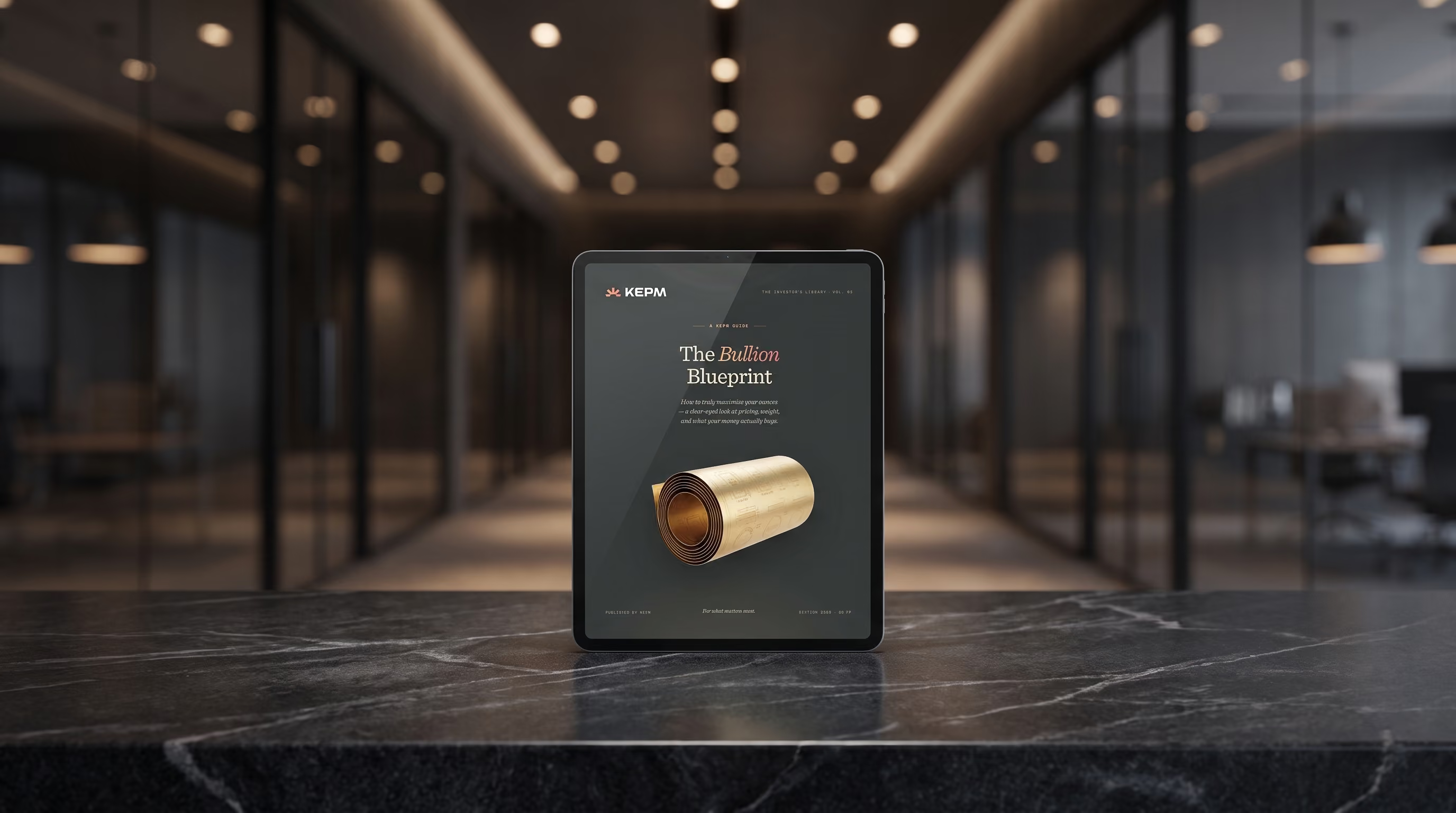
The Bullion Blueprint is Dr. Kirk Elliott's plain-language guide to owning physical gold and silver: how bullion works, how honest pricing works, and how to protect what you've built.