Is Gold Better Than Silver?
Which is better depends on what you need each metal to do. Silver and gold tend to perform differently for different reasons, and understanding those differences is the best place to start.

Central banks, sovereign wealth funds, and individuals around the world hold gold for the same reason: it has historically helped preserve value through inflation, currency shifts, and economic uncertainty.
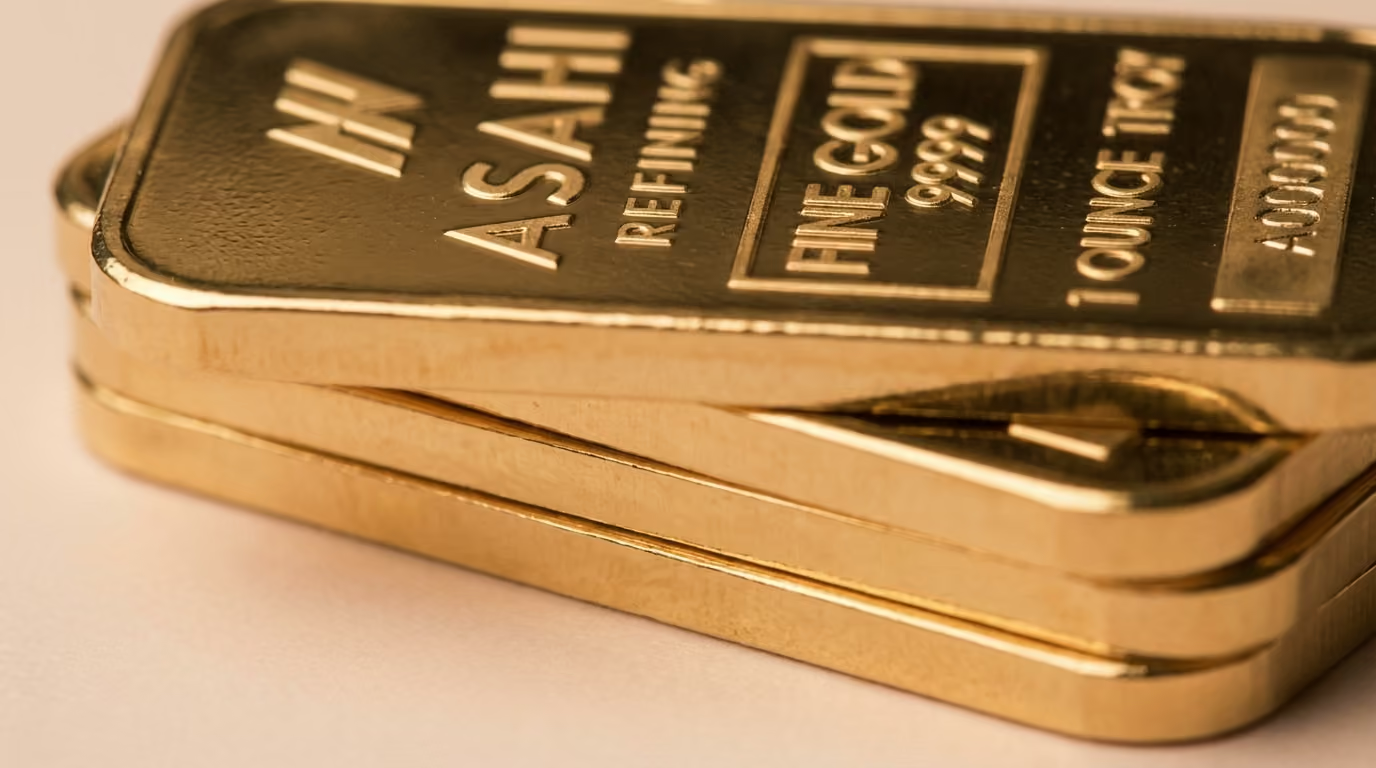
Gold has outlasted every fiat currency ever created. It has preserved purchasing power through world wars, depressions, hyperinflation, and every variety of financial disruption the modern world has produced. Its worth does not rely on a government, a corporation, or a promise from any third party. When you hold physical gold in your own possession, there is no counterparty risk: no issuer honoring an obligation, no bank staying solvent, no institution making good on a promise. It is worth what it is, independent of anyone else's ability or willingness to pay. That is why central banks hold it. That is why families hold it. And that is why it adds a time-tested hedge against inflation to a portfolio built not just for growth, but for safety and growth.

Gold is accepted as a store of value in almost every country on earth. It transcends borders, currencies, and political systems. That universality is part of what makes it enduringly stable.

Gold can help protect you against currency devaluation driven by money printing at central banks around the world. When governments run short of money, they reach for one of two levers, raising taxes or printing more currency, and often both. Gold offers a hedge against these political and economic forces, forces that sit entirely outside your control.
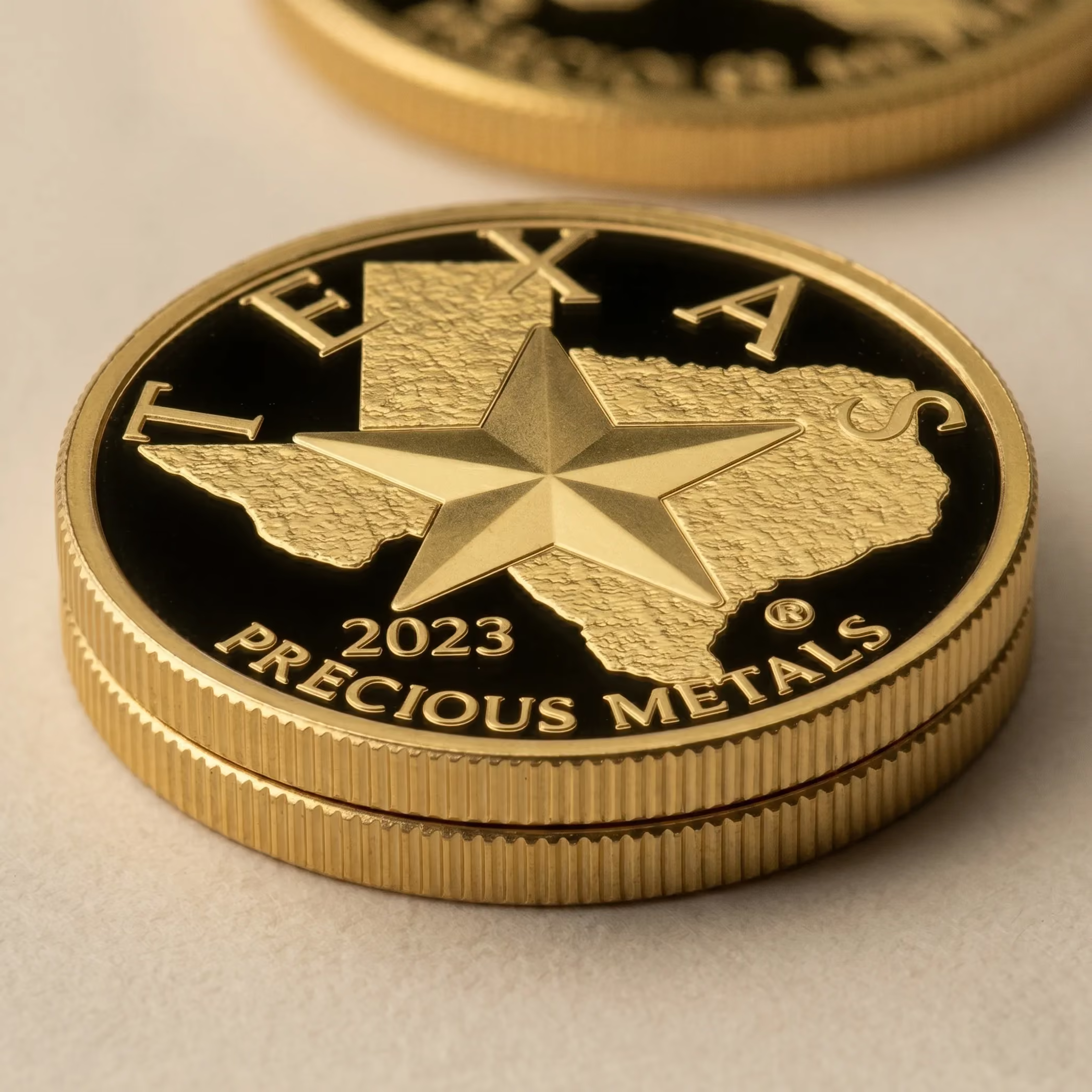
Since 1971, when the United States left the gold standard, the dollar has lost more than 85% of its purchasing power. In that same period, gold has risen from $35 per ounce to over $4,000 as of 2026. Gold does not "go up." The dollar goes down. That is the essence of the inflation hedge: as the dollar devalues, the dollar price of gold rises, helping preserve the purchasing power you have already earned. And historically, gold has done more than keep pace with inflation. It has outperformed it as demand has increased, geopolitical tensions have risen, and central banks have diversified their reserves away from traditional paper assets. The story begins well before 1971. The Federal Reserve Act of 1913 set in motion a series of events that reshaped the international monetary system, and that reshaping continues today. Consider a simple example. Before 1933, the U.S. dollar was convertible into gold, and one ounce of gold was equal to a $20 bill. What would $20, or one ounce of gold, buy back then? A finely tailored men's suit, a shirt, a belt, shoes, and a tie. Today, $20 barely covers a fast food meal. Yet one ounce of gold, at over $4,000 as of 2026, will still buy that finely tailored suit, shirt, belt, shoes, and tie, with plenty left over. The lesson is simple. Gold has held its purchasing power across generations. And when you hold physical gold in your own possession, there is no counterparty risk: no issuer, no institution, and no exchange rate stands between you and what you own.* *Past results are not necessarily indicative of future results.
In recent years, central banks around the world have been net buyers of gold at their highest pace since the 1960s. Countries including China, India, Turkey, and Poland have significantly increased their gold reserves. These institutions buy gold for the same reasons individuals do: to diversify away from dollar-denominated assets and to hold something that retains value independent of monetary policy decisions. Consider this timeline of key milestones for gold: 1792: The Coinage Act initially backed the dollar with 24.75 grains of gold. 1834: The dollar was redefined to 23.22 grains of gold, a devaluation of roughly 6%. 1933: President Franklin D. Roosevelt suspended domestic gold convertibility through Executive Order 6102; citizens could no longer exchange dollars for gold. 1934: The Gold Reserve Act revalued gold to $35 per ounce, devaluing the dollar by about 41%, while maintaining international convertibility. 1971: President Richard Nixon ended international convertibility on August 15, 1971, completing the dollar's transition to a fiat currency backed by government trust. 1973: The U.S. dollar became effectively linked to oil through a multilateral agreement tying international oil sales to the dollar. In recent years, some nations have begun settling oil trade in their own currencies through bilateral agreements, and the dollar's share of global reserves has gradually declined. That shift helps explain why central banks have been adding to gold as a reserve asset.
During the inflationary period of the 1970s, gold rose over 1,400%. During the 2008 financial crisis, gold gained while the S&P 500 lost nearly half its value. From 2022 through 2025, the price of gold more than doubled, climbing to over $4,000 per ounce as of early 2026. Gold does not perform well because of panic. It performs well because, in times of stress, people and institutions return to the asset that has proven itself across centuries. Gold is more than a financial asset. Its price is also a reflection of trust in the system. When confidence in governments, banks, and currencies comes under strain, people have historically turned to gold as a safe haven, because human nature puts safety and self-preservation first.* *Past results are not necessarily indicative of future results.
When you hold physical gold, you are not dependent on a fund manager's decisions, a corporation's solvency, or a government's fiscal policy. Your gold exists outside the traditional financial system. It carries no debt. It generates no counterparty exposure. It is yours, fully and completely, stored in your name.
Answers to your top questions about history’s ultimate safe-haven asset.
Gold has performed consistently across decades, not because of hype, but because of its fundamental properties. It is scarce, durable, universally recognized, and independent of any single government or institution. From 2022 through 2025, the price of gold more than doubled, reaching over $4,000 per ounce as of early 2026, driven by inflation concerns, central bank purchasing, and geopolitical instability.
Past results are not necessarily indicative of future results. But the conditions that drive people toward gold, inflation, fiscal uncertainty, and a desire for tangible assets, remain present. Gold is not a speculation. It is a long-term strategy for preserving purchasing power.
KEPM deals exclusively in investment-grade bullion. Each bar and round is produced under a mint's quality-control standards and stamped with its weight and purity. Metals stored at the Texas Precious Metals Depository are held in a documented chain of custody and covered by the facility's regular independent audits. If you would like to understand how sourcing and custody work for your specific bars and rounds, your KEPM consultant will walk you through it.
Many of our clients own both, and there are good reasons for that. Gold tends to be the more stable store of value, with generally less price volatility than silver. It has historically helped maintain purchasing power over long periods and serves as a financial anchor. Silver, on the other hand, has greater growth potential because of its dual role as both a monetary metal and an industrial commodity with rising demand. It carries two layers of demand: one as a monetary metal, and one as an industrial metal used in electronics, batteries, solar, EVs, AI chips and cryptocurrency mining, nuclear power, aerospace, and defense manufacturing.
The right balance depends on your goals, your timeline, and your budget. Silver has a lower entry point and can be accumulated steadily over time. Your KEPM consultant can walk you through both options and the process of acquisition, storage, shipping, and selling, so you can decide on the mix that fits your goals.
Which is better depends on what you need each metal to do. Silver and gold tend to perform differently for different reasons, and understanding those differences is the best place to start.