How to Tell If Gold Is Real: A Beginner's Guide to Authentication
Gold has been counterfeited for as long as it's been valued, so how do you actually know the piece in your hand is the real thing? Here's a look at the most common authentication methods and the simplest way to take the guesswork off your plate.


If you have ever picked up a gold coin or bar and wondered, "How do I actually know this is real?", you are asking the right question. Gold has been counterfeited for as long as it has been valued, and the modern market has its share of fakes, plated pieces, and cleverly weighted impostors.
Authentication isn't as complicated as it sounds. It's a series of checks, and most of them are handled well before the metal ever ends up in your hands.
Start With What the Stamp Tells You
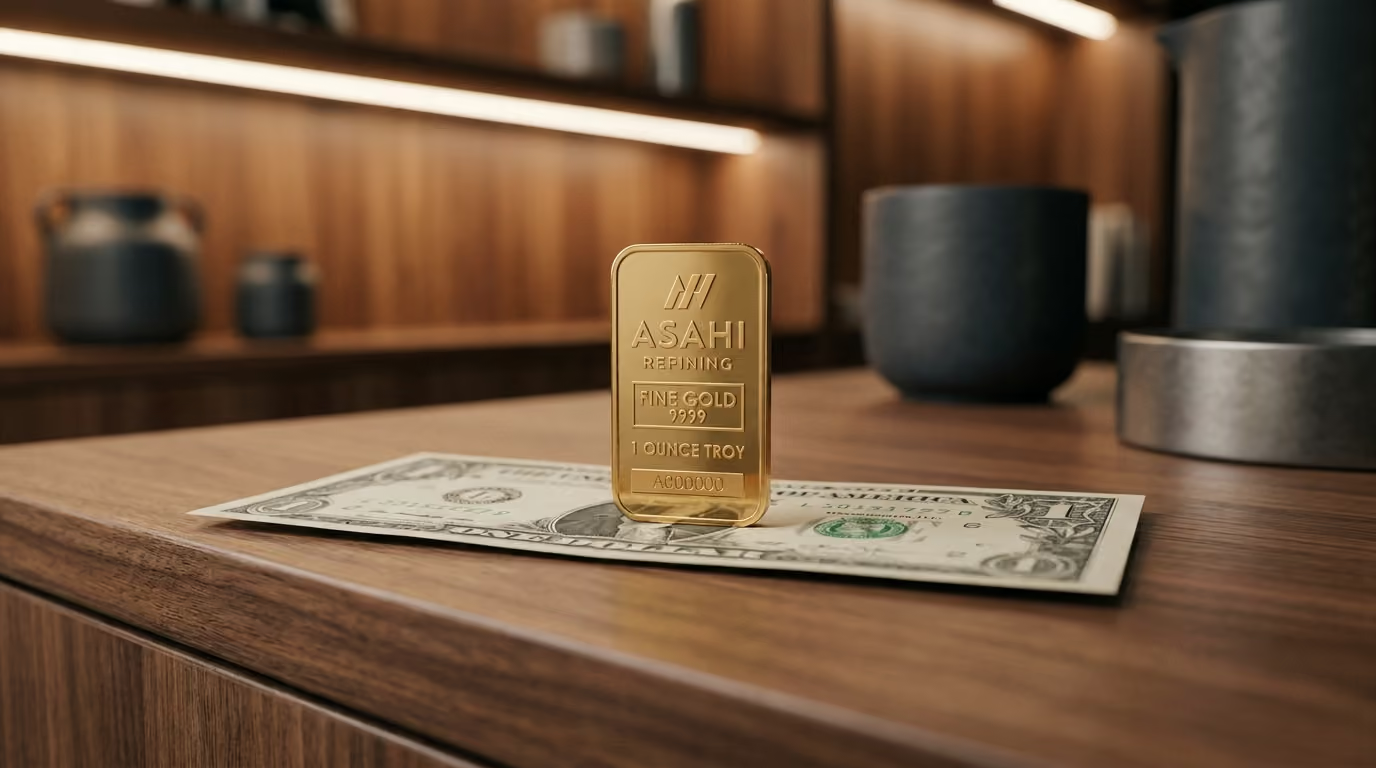
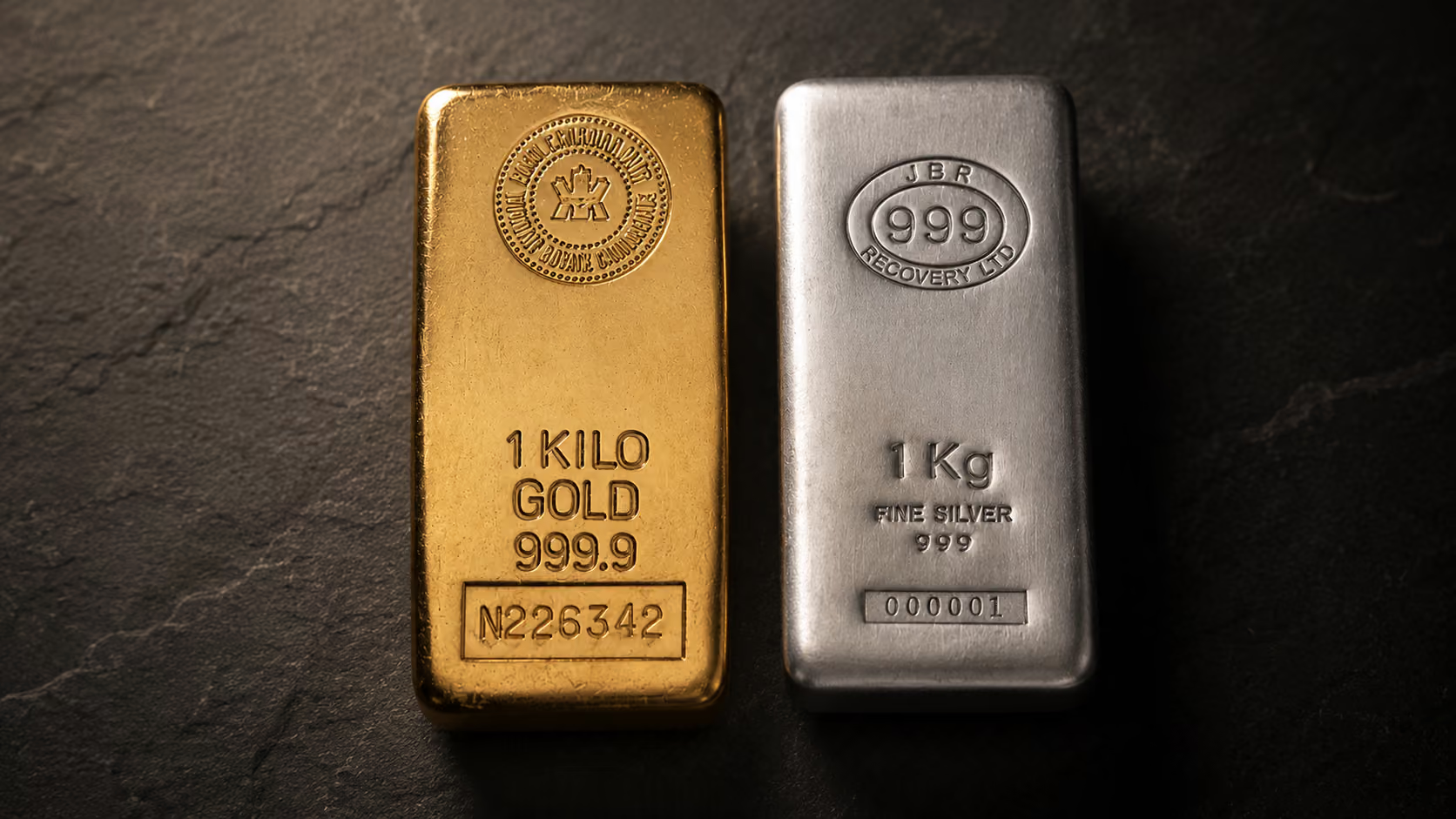
Investment-grade bullion is stamped with the information you need to authenticate it.
- Purity. Investment-grade gold is at least .995 fine, or 99.5% pure. Many sovereign and private mints produce .999 or .9999 fine bullion. The purity stamp should be clearly visible on the bar, round, or coin.
- Weight. The weight is stamped in troy ounces or grams.
- Mint or refinery mark. The producing mint or refinery is identified with a hallmark or logo.
- Serial number. Many investment-grade bars carry an individual serial number, which is recorded by the producing mint.
If a piece does not clearly carry these markings, that is the first signal to slow down.
At-Home Tests, Ranked From Least to Most Reliable
A number of common tests circulate online. Each one has a place, and each one has limits.
The Magnet Test
Gold is not magnetic. If a piece is strongly attracted to a magnet, it is not pure gold.
- What it tells you. A clear fail means the piece is either iron, steel, or a base-metal alloy with magnetic content.
- What it does not tell you. Many counterfeits use non-magnetic base metals such as tungsten, lead, or brass. A piece can pass the magnet test and still not be gold.
- Verdict. Useful as a fast disqualifier. Not useful as proof of authenticity.
The Density Test
Gold is unusually dense. Pure gold has a density of about 19.3 grams per cubic centimeter, which is significantly higher than most other metals. The test involves weighing the piece, measuring its volume by water displacement, and dividing.
- What it tells you. A density well below 19.3 g/cc is a strong indicator of an alloy or counterfeit.
- What it does not tell you. Tungsten has a density very close to gold (about 19.25 g/cc), and tungsten-cored fakes are specifically designed to defeat this test. Density also requires a careful measurement, and small bars or coins can give noisy readings.
- Verdict. Useful for larger bars and reasonable confidence on most counterfeits. Not sufficient on its own for high-value pieces.
The Acid Test
Acid testing kits use nitric acid solutions of varying strengths to test the surface of a piece. Real gold does not react. Base metals do.
- What it tells you. A clear surface result with the appropriate acid strength suggests the surface is gold of at least the tested fineness.
- What it does not tell you. Acid only tests the surface. A gold-plated tungsten core would pass the surface acid test. Acid testing is also destructive in a small way, since it leaves a mark on the test point.
- Verdict. Useful for jewelry-grade verification. Limited for plated counterfeits and not generally used on investment-grade bullion that you want to keep pristine.
Visual and Hallmark Inspection
Looking carefully at the stamps, edges, fonts, and finish of a piece is one of the most underrated tools. Recognized mints produce extremely consistent work. Counterfeit fonts, off-center stamps, weight discrepancies, or blurry mint marks are common tells.
- What it tells you. A trained eye can spot most low-quality counterfeits.
- What it does not tell you. Sophisticated fakes can pass casual visual inspection. Side-by-side comparison with an authenticated reference is far more useful than memory alone.
- Verdict. Always worth doing. Not sufficient on its own for high-value purchases.
Sound and Ping Tests
Pure gold and silver produce a distinct, sustained ring when tapped lightly. Base-metal counterfeits typically produce a duller, shorter sound.
- What it tells you. A clearly wrong sound is a meaningful signal.
- What it does not tell you. This is a feel test, not a measurement. It is most useful with experience and side-by-side reference.
- Verdict. A reasonable secondary check, especially for coins and rounds.
Professional Verification
For higher-value purchases, professional methods are the standard.
- XRF (X-ray fluorescence) testing. A non-destructive scan that reads the elemental composition of a piece. XRF is widely used by mints, refineries, and professional buyers. It is highly accurate for surface composition, but like the acid test, it cannot definitively rule out a deeply core-substituted counterfeit on its own.
- Ultrasound thickness testing. A non-destructive method that measures the speed of sound through the piece. Because tungsten and gold transmit sound differently, ultrasound is one of the better defenses against tungsten-cored counterfeits.
- Sigma metalytics or specific-gravity scales. Combined non-destructive testing that measures conductivity and density together. Used by professional buyers and dealers.
The pattern across all of these is the same: no single test is definitive on its own, but a combination of tests applied by a trained operator is highly reliable.
The Structural Shortcut: Sourcing
The fastest, most reliable answer to "is this gold real?" is "where did it come from?"
When metal is sourced directly from recognized mints and refiners, produced under strict quality-control standards and stamped with weight and purity, and held inside a chain of custody that includes segregated storage and regular independent audit, the authentication question is largely answered upstream.
KEPM deals exclusively in investment-grade bullion sourced from recognized mints, and metals stored at the Texas Precious Metals Depository are fully segregated, audited regularly, and insured through the underwriters at Lloyd's of London. The chain of custody from mint to depository is documented end to end.
This is one of the practical reasons KEPM does not deal in numismatic or collectible coins. Beyond the premium concerns covered in our investment-grade bullion post, collectible coins introduce authentication and grading complexity that investment-grade bars and rounds simply do not carry.
The Bottom Line
Authentication is a real concern, and it is also a solved problem when handled properly. At-home tests are useful but layered, and no single one is definitive. Professional methods are the standard for high-value purchases. The most reliable approach of all is structural: metal sourced from recognized mints, produced under mint quality control, and stored with a documented chain of custody.
Neither the home test bench nor the professional XRF gun is the right tool for every situation. Most KEPM clients sidestep the question entirely by buying investment-grade metal that is stored, documented, and audited from the moment it leaves the mint.
Frequently Asked Questions
What is the easiest way to test if gold is real at home?
The magnet test is the fastest, but it only catches the most obvious fakes. A more reliable at-home approach is to combine careful visual inspection of the mint markings, a density measurement on larger bars, and a sound test. None of these alone is definitive. Together they catch most low-quality counterfeits.
Can a piece pass the magnet test and still be fake?
Yes. Tungsten, lead, and brass are non-magnetic base metals frequently used in counterfeits. A piece that passes the magnet test should still be checked for density, visual hallmarks, and ideally professional verification before any large purchase.
Will the acid test damage my gold?
The acid test leaves a small mark at the test point. For investment-grade bullion you want to keep pristine, acid testing is not the preferred method. Non-destructive options like XRF and ultrasound are better suited to high-value pieces.
How do reputable dealers authenticate the metal they sell?
Most dealers do not independently test the metal they sell, even reputable ones. What protects you is the chain of custody: metal sourced directly from recognized mints and refineries, produced under strict quality-control standards and stamped with weight and purity, then held in a documented chain of custody and covered by regular independent audits.
How does KEPM make sure the metal it sells is real?
KEPM deals exclusively in investment-grade bullion sourced from recognized mints, produced under mint quality control and stamped with weight and purity. Metals stored at the Texas Precious Metals Depository are fully segregated, insured through the underwriters at Lloyd's of London, and subject to regular independent audits, with a documented chain of custody. If you take direct delivery, the metal ships insured, in sealed and documented packaging.
Talk Through It With Your Consultant
If you are weighing how to think about authentication, sourcing, and custody for your own holdings, a conversation is a good next step. Your KEPM consultant will listen to your situation, walk you through how sourcing and custody work in practice, and help you understand what to look for when you are deciding where to buy. No pressure. No obligation. Just honest answers to your questions.
Schedule a consultation with a KEPM consultant.
Disclosures
KEPM cannot provide tax or legal advice and will not advise as to the tax or legal consequences of purchasing or selling precious metals. Individuals should consult with their own tax, legal, or investment professionals for guidance specific to their situation. Physical precious metals spot prices fluctuate and involve risk of loss. Past results are not necessarily indicative of future results.


Not Sure Where to Begin? Start Here.
Before you buy a single ounce, it helps to understand the fundamentals.
The Bullion Blueprint is Dr. Kirk Elliott's plain-language guide to owning physical gold and silver: how bullion works, how honest pricing works, and how to protect what you've built.